
Table of Contents
1. Overview of Heavy Duty Industrial Gearbox
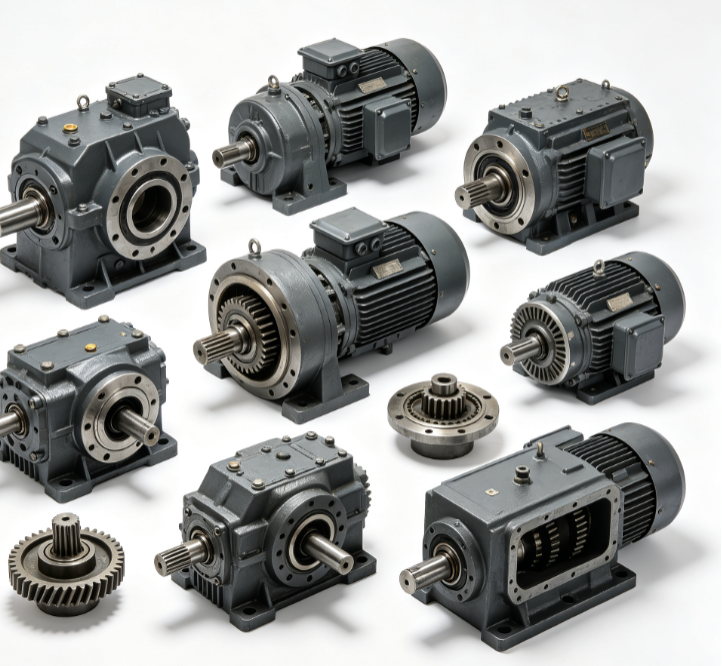
2. Main Types of Heavy Duty Industrial Gearboxes
3. Technical Performance Comparison Data
4. Core Materials and Structural Features
5. Common Industrial Application Scenarios
6. Basic Maintenance and Service Rules
7. Industry FAQs
1. Overview of Heavy Duty Industrial Gearbox
Heavy duty industrial gearbox is a robust power transmission device. It adjust motor speed and amplify torque for heavy-load mechanical systems.
It different from standard light-duty gear reducers. It design to sustain continuous high torque, shock loads and harsh working conditions.
Heavy duty gear units maintain stable operation in long-cycle production. They reduce equipment wear and extend mechanical service life.
These industrial gear systems act as core transmission components. They match heavy machinery in mining, construction and manufacturing fields.
2. Main Types of Heavy Duty Industrial Gearboxes
Multiple structural types belong to heavy duty industrial gearbox series. Each type fit unique load and installation demands.
2.1 Heavy Duty Helical Gearbox
Helical gearbox is the most widely used heavy-duty model. It use helical tooth meshing structure for smooth power transfer.
It have low operation noise and high transmission efficiency. It suit continuous running industrial equipment.
2.2 Heavy Duty Planetary Gearbox
Planetary gearbox adopt sun and planet gear transmission structure. Multiple gears share load at the same time.
This design provide ultra-high torque density. It achieve large torque output in compact size.
2.3 Heavy Duty Bevel-Helical Gearbox
Bevel-helical gearbox combine bevel gear and helical gear structure. It support right-angle power transmission.
It keep high efficiency under heavy load. Common for complex mechanical layout scenarios.
2.4 Heavy Duty Worm Gearbox
Worm gearbox deliver large speed reduction ratio in single stage. It have good self-locking performance.
It is less efficient than gear types. But it still used for low-speed, high-torque auxiliary heavy equipment.
3. Technical Performance Comparison Data
Transmission efficiency, torque density and working stability define gearbox performance. The table below show verified industrial standard data.
Gearbox Type
Transmission Efficiency
Torque Density Level
Typical Noise Level
Best Working Condition
Helical Gearbox
94% - 98%
Medium High
65-72 dB
Continuous heavy load operation
Planetary Gearbox
97% - 99%
Very High
60-68 dB
Limited installation space, high torque demand
Bevel-Helical Gearbox
93% - 97%
High
68-75 dB
Right-angle transmission heavy machinery
Worm Gearbox
60% - 85%
Medium
58-65 dB
Low speed, intermittent load work
Planetary heavy duty industrial gearbox have the highest comprehensive performance. It save energy and space for heavy industrial systems.
Worm gear units have obvious efficiency defects. Its self-locking feature make it irreplaceable for specific safety-critical equipment.
4. Core Materials and Structural Features
Heavy duty industrial gearbox use high-strength alloy materials to resist heavy load and fatigue damage.
Gear components usually adopt 42CrMo alloy steel. After quenching and tempering treatment, surface hardness reach stable standard.
Gearbox casing use thick cast iron or alloy steel. It resist vibration and impact in harsh working environments.
Precision bearing and sealing structures prevent oil leakage. It reduce dust and moisture erosion inside the gear system.
5. Common Industrial Application Scenarios
Heavy duty industrial gearbox support almost all heavy mechanical transmission fields.
Mining industry use planetary and helical gearboxes. They drive mine conveyors and crushing equipment under long-term heavy load.
Construction machinery adopt bevel-heavy gear units. They provide stable power for mixing and lifting equipment.
Chemical and cement industry rely on high-efficiency helical gearboxes. They adapt high-dust and continuous operation environment.
Port logistics equipment use heavy duty gear reducers. They bear frequent start-stop shock loads in cargo handling work.
6. Basic Maintenance and Service Rules
Correct maintenance extend heavy duty industrial gearbox service life greatly.
Regular gear oil replacement is necessary. Degraded lubricant increase gear wear and reduce transmission efficiency.
Check sealing parts every quarter. Oil leakage will cause gear dry friction and permanent damage.
Avoid long-term overload operation. Overload will lead to gear tooth deformation and transmission failure.
7. Industry FAQs
Q1: Which heavy duty industrial gearbox has the highest efficiency?
A1: Planetary gearbox hold the highest efficiency level. Single-stage transmission efficiency can reach 97% to 99% in standard working status.
Q2: What is the key difference between heavy-duty and ordinary gearbox?
A2: Heavy duty gearbox use thicker alloy structure and heat-treated gears. It support higher torque, stronger shock resistance and longer continuous working time.
Q3: Is worm gearbox suitable for high-frequency heavy load work?
A3: No. Worm gearbox have low transmission efficiency. Long-term heavy load will cause serious heat accumulation and component aging.
Q4: How to choose gearbox type for limited installation space?
A4: Planetary heavy duty industrial gearbox is the best choice. It provide high torque output with compact structural size.